Flying with the Red Arrows: A Photographer’s View from Inside the Hawk
By Jamie Hunter
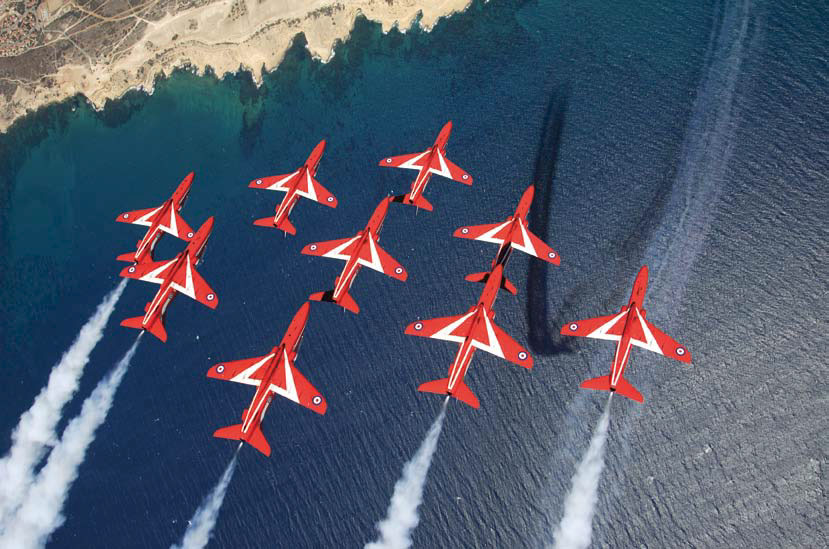
The Royal Air Force Aerobatic Team, the Red Arrows, represents the very public face of the RAF and demonstrates the professionalism and excellence of the Service.
It also plays an important role in representing the UK around the world.
Everyone has heard of the Red Arrows. When you watch one of their displays it is always polished, precise and very impressive.
Even before one display season ends, the team is preparing for the next. Through winter and into spring, the close-knit team of flying and support staff operate to a gruelling schedule, with extensive flying and preparation required before the new season begins.
And it isn’t just about the pilots. The team includes a large squadron of flying and support staff who work together to represent the best that the RAF has to offer.
Photographing the Red Arrows from the Air
I am one of a small number of specialist aviation photographers who have been privileged to fly with the team on display practice sorties.
Before flying with the team itself, first-time fliers undergo an essential check-out flight with a spare aircraft. This is usually with the road manager and commentator pilot, known as Red 10, to make sure the passenger can cope with the harsh environment that is the back seat of one of the team’s Hawk aircraft during a display.
It is an onslaught of aerobatic flying, and they need to make sure you can cope with the G-forces and the possibility of airsickness.
The other big no-no is touching the control stick.
The Hawk trainer jets used by the Red Arrows are two-seaters and have a linked control stick in the back. You really cannot afford to knock the stick while flying in such close formation.
I conducted basic flying training with the RAF and later completed my Private Pilot’s Licence. I am no longer a pilot and always fly as a passenger in my work as a photographer.
My career has been devoted to aviation photography. I have accumulated extensive experience flying and photographing everything from airliners to stealth bombers, and I have been privileged to fly with the Red Arrows as a photographer since 2005.
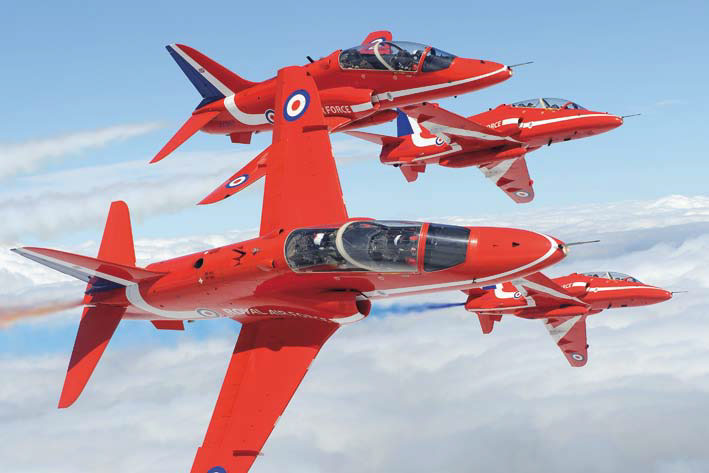
I am now cleared to fly in the team’s aircraft, which means I can experience everything from the formation flying of the team leader through to the extreme environment of the Synchro Pair.
Preparing for the Flight
Every year, the team embarks on an intensive training programme to prepare for the new airshow season.
During the period covered by this article, this included spending time at RAF Akrotiri in Cyprus to take advantage of the good weather while fine-tuning the display.
Here, the team flew multiple full display practices each day.
As a passenger, I would ‘walk’ to my allocated Hawk well in advance of the nine team pilots to ensure I was ready when they arrived.
The pilots arrive at the aircraft with only minutes to spare.
They don G-suits, life-saving jackets and helmets and strap into the Hawks in very short order, ready to meet the split-second timing required for the entire flight.
The flight starts with a predetermined check-in time.
“Reds check, 2, 3, 4, 5, 6, 7, 8, 9. Akrotiri tower, Red Arrows, nine aircraft ready to taxi.”
As the team leader checks in with the tower, I put my dark visor down and raise my oxygen mask as my pilot checks that I am ready to close the canopy.
The canopy requires particular care when being closed and the ejection-seat system means that the passenger has to be correctly positioned.
I have already set my weight on the ejector seat and lowered the seat to ensure I have sufficient clearance above my helmet and the canopy.
As we line up on the sunbleached runway, the adrenaline is already starting to flow — and I am just a passenger taking photographs.
“Display take-off coming left.”
The call from the leader comes as the aircraft line up at intervals along the runway.
“Reds rolling… now.”
With full power applied, the pilots release the brakes and we roll down the runway together.
Into Formation
Once airborne, the nine Hawks immediately move into tight diamond formation.
This really is close, rock-solid formation flying, and the pilots are all working incredibly hard.
From my position as a passenger, it is extremely impressive to watch.
The pilots use power, airbrake, rudder and stick to maintain their positions. The level of concentration and skill required is extraordinary.
We are cleared in to a full practice display over the cliffs at Akrotiri.
“Smoke on… go!”
“Coming right… now.”
“Holding the bank… now.”
“Tightening.”
The calls from the leader at the front of the formation are constant and vital for the rest of the team, who are following his lead.
The team leader has many factors to take into account to guide the team safely around the routine while maintaining accurate positioning and precise timing.
For this particular practice, he also has a strong on-crowd wind to take into account.
Photographing Under G-Force
As a photographer passenger, it is crucial that the pilot doesn’t feel you in the back.
You never, ever knock the control column by mistake. That could invite disaster.
The “tightening” call from the leader signals that G is coming on in the turn.
Even at around 3G, that is enough to mean I need to brace myself or stow my camera on the instrument panel in front of me.
Then comes:
“Letting it out.”
This means that the leader is relaxing the pull in the turn and the G comes off.
For the first half of the display, the team performs a sequence of turns and loops in changing formations.
Meanwhile, I am in the back, working hard to capture as many exhilarating moments of the display as possible, punctuated by some aggressive, chest-crushing flying.
Enid and Gypo
The end of the first half of the display is marked by the team splitting into two sections.
The front section is known as Enid, while the rear formation is known as Gypo.
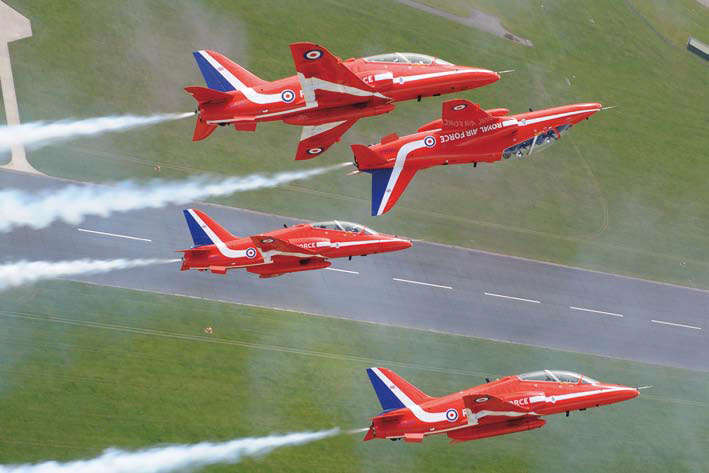
The second section performs the famous Synchro Pair crossing manoeuvres.
The work rate for the pilots is extraordinary throughout the flight.
The dark helmet visors of the pilots mask the immense concentration and workload required to stay on the wings of the leader as they paint the sky with red, white and blue smoke through their looping, rolling and breaking manoeuvres.
Meanwhile, I am in the back trying to make photographs while being subjected to the same forces as the aircraft manoeuvres.
Thirty Minutes in the Air
After a sweat-soaked 30 minutes, we are running in over the airfield for one final formation break before landing.
One last G-saturated pull and we are ready for landing.
A quick check that my toes are clear of the brakes and we turn finals to land on the runway at Akrotiri.
The sweat is pouring off me, so goodness knows how the pilots have remained so cool.
As we taxi in, I am cleared to replace the necessary safety pins and, as we come to a halt, we are met by the dedicated ground crews.
As the canopy opens, the engines have already spooled down and my pilot is climbing out.
“See you inside,” he says, as the engineers swing into action to prepare the jets for the next practice.
The Debrief
The pilots immediately go into a detailed team debrief.
This is a vital part of the process, making full use of video filmed from the ground during every display.
The pilots are extremely hard on themselves.
Calls of “short”, “long”, “shallow” and “deep” from various members of the team indicate how they feel their positioning was within each formation.
Sitting in the debrief, I struggle to see the errors.
But these pilots are talking about literally inches of difference in positioning.
That is the level of precision involved.
It also helps explain the extraordinary levels of excellence that the Red Arrows maintain throughout their display season.
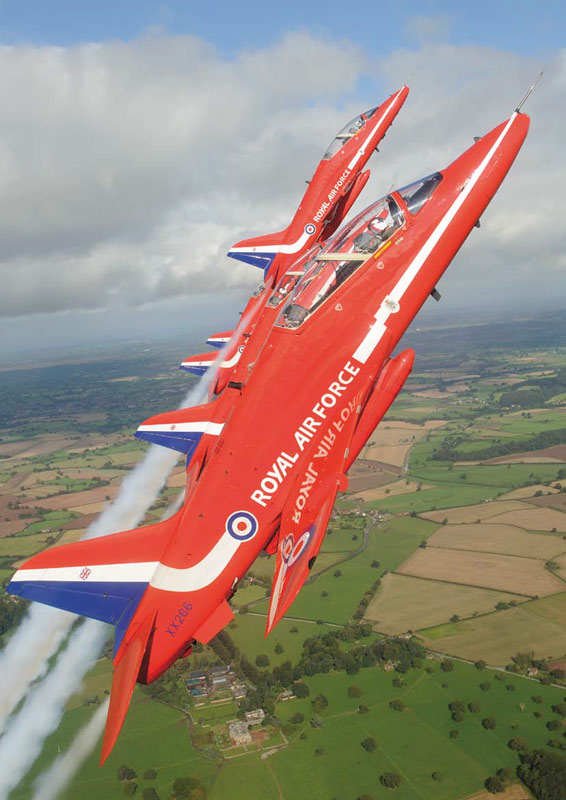
The Photographer’s Challenge
For me, as a photographer, it is a huge privilege and challenge to try to capture this incredible experience and give some insight into the team.
Photographing from the back seat is unlike photographing an airshow from the ground.
You have to contend with G-forces, limited space, rapidly changing angles and the constant need to remain aware of the aircraft and your surroundings.
At the same time, the aircraft are moving through complex formations at extraordinary speed and precision.
There is no opportunity to ask them to repeat a manoeuvre because you weren’t ready.
You have to be ready.
You have to anticipate.
And you have to make the photograph while experiencing the same flight.
The Red Arrows in Action
After months of hard work in pre-season training, the Red Arrows are eventually granted Public Display Authority, normally in mid-May.
This marks the point at which the team is approved for the new season and ready to return to airshows and public events.
The display season brings the team back in front of crowds around the UK and overseas, where the famous red, white and blue smoke trails once again fill the sky.
The photography produced during these displays becomes an important part of the public’s memory of the team — posters, calendars, publications and countless photographs helping to document their performances.
For me, however, the real privilege is having the opportunity to experience the display from inside the aircraft.
To sit in the back of a Hawk while nine aircraft fly a complex routine around you is an extraordinary photographic assignment.
The precision is astonishing.
The trust between the pilots is absolute.
And from a photographer’s perspective, there are few experiences quite like it.
In the words of the Red Arrows motto:
Eclat — brilliance.